- Leading the training of the best professionals of the 21st century


 A-GLOSS
Contact us for more information.
The course “Crime Prevention Through Environmental Design (CPTED)” It provides a comprehensive and applied overview of the CPTED approach as a key tool for crime prevention in urban and community settings. Taught and developed by A-GLOSS, The program addresses the fundamentals of CPTED, its theoretical origin and its practical application in the design of safer spaces.
The course analyzes how the physical environment influences human and criminal behavior, highlighting the importance of environmental design as a preventive factor in building safe and resilient communities.
The course combines a series of theoretical modules with a practical approach, including real-world case studies, comparative analyses, applied exercises, and guided discussions. Activities focused on the observation and evaluation of urban spaces, both in real and simulated environments, are incorporated.
Educational resources such as texts, photographs, images, graphics, diagrams and online interactions are used to facilitate progressive, applied and understandable learning.
Initial list of topics and exercises contained in each module and developed throughout the course, addressing the fundamental principles of CPTED, the relationship between environment and criminal behavior, and preventive design strategies.
Syllabus content in web format with texts, photographs, images, graphics and necessary teaching resources that address the topics in each training session and serve as theoretical and practical support for the student's training.
Supporting documents that serve as reading and analysis material and complement the content of the syllabus, which may consist of specialized articles, urban studies, academic material and audiovisual resources.
Self-assessment at the end of each content with the aim of the student reinforcing concepts, principles and analysis criteria related to environmental design and crime prevention.
Videoconferences with voluntary attendance by students, being recorded for later viewing.
The student will have access to individualized tutoring as continuous support to achieve the course objectives and consolidate applied knowledge in CPTED.
Forums and messaging will allow interaction between students and teachers to resolve doubts, exchange experiences, and analyze cases.
Bibliography provided to acquire the necessary theoretical and practical knowledge about CPTED, environmental criminology and safe urban design.
Completion of an individual work of analysis or evaluation of an urban space, aimed at applying the principles of CPTED as closure of the training process.
At the end of the course, participants will receive a certificate of completion endorsed by A-GLOSS, which certifies their knowledge and skills in Crime Prevention Through Environmental Design (CPTED) and in the application of design strategies focused on urban and community safety.
Understand the fundamental principles of CPTED and their practical application.
Analyze how the physical environment influences criminal behavior.
Identify vulnerabilities in urban and community spaces.
Assess risks in public areas from a preventative perspective.
Design environmental strategies that reduce opportunities for crime.
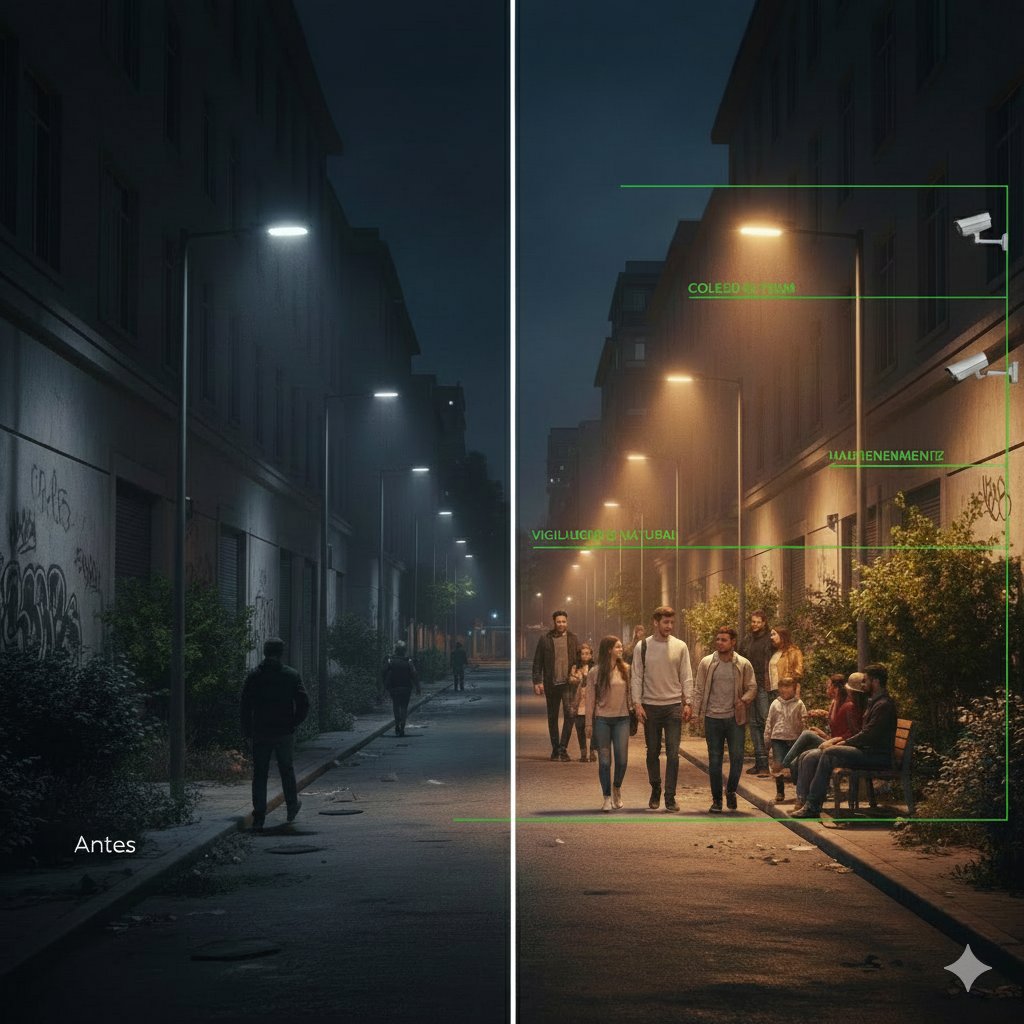
Apply criteria for lighting, visibility and natural control of the environment.
Integrate urban design, safety and crime prevention.