About Bundle
Expert in Scenario Management in Complex Environments
Start date: Contact us for more information.
Introduction
The program “Expert in Scenario Management in Complex Environments” It is an advanced training program aimed at preparing professionals capable of act, coordinate and survive operationally in critical high-risk scenarios: violent attacks, unstable areas, armed incidents, multiple threats, and contexts with a high level of uncertainty.
Developed and delivered by A-GLOSS, This itinerary integrates essential knowledge and procedures for operating professionally in environments where the margin of error is minimal, combining self-protection, situational assessment, intervention in armed threats, and tactical first aid. The program strengthens decision-making under pressure, environmental awareness, and the execution of immediate response protocols to protect one's own life and the lives of others.
It is aimed at operational, security, and emergency response profiles that need applicable tools for real-life scenarios, where technical preparation and operational discipline are key.
Courses that make up the program
The program is structured into four specialized courses, which complement each other:
-
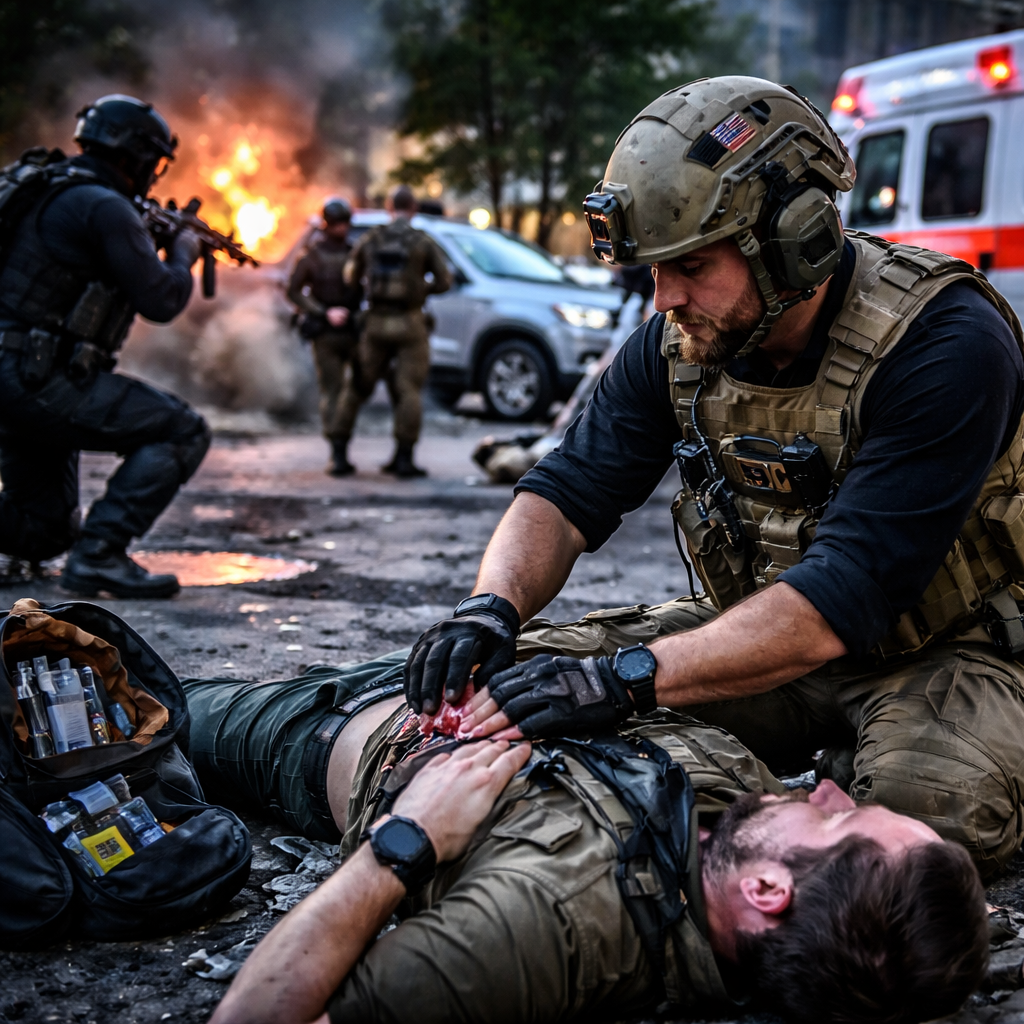
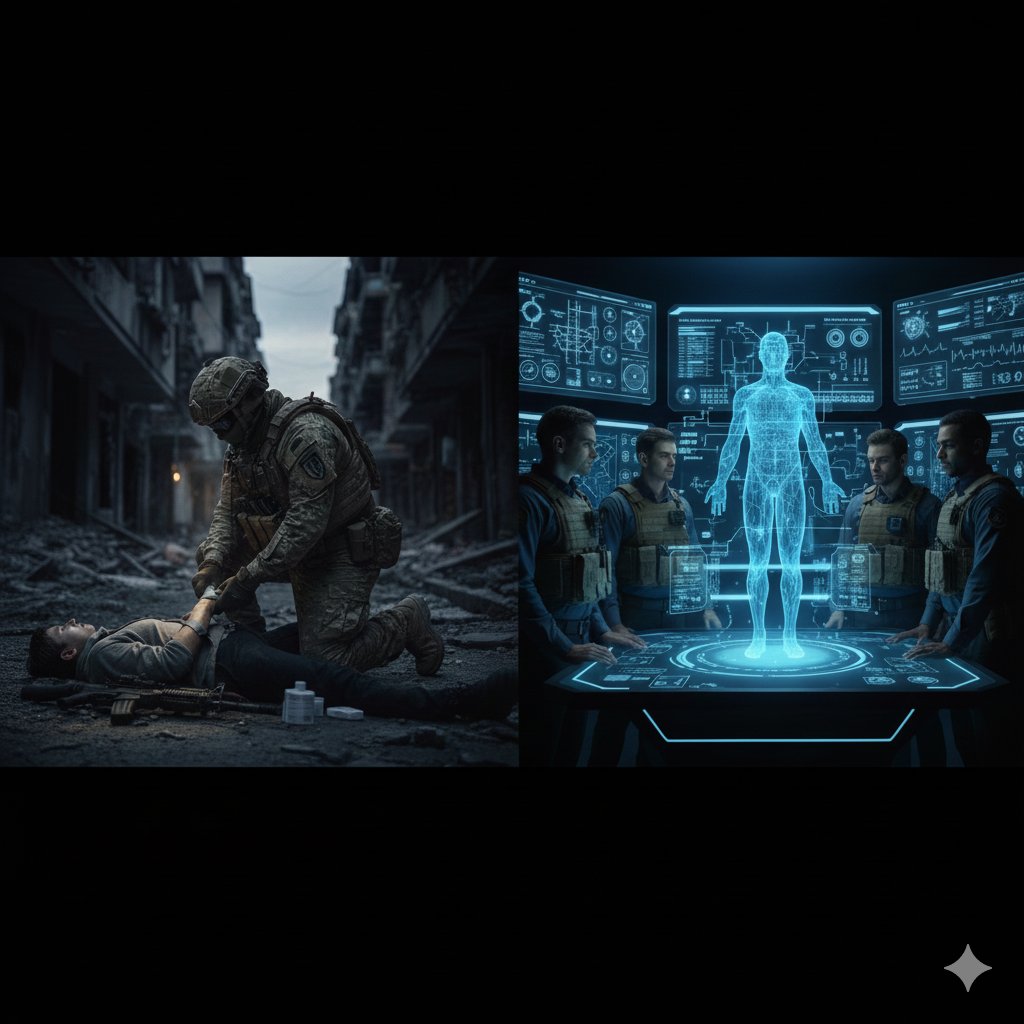
(PAET) First Aid in Tactical Environments (130 h)
-
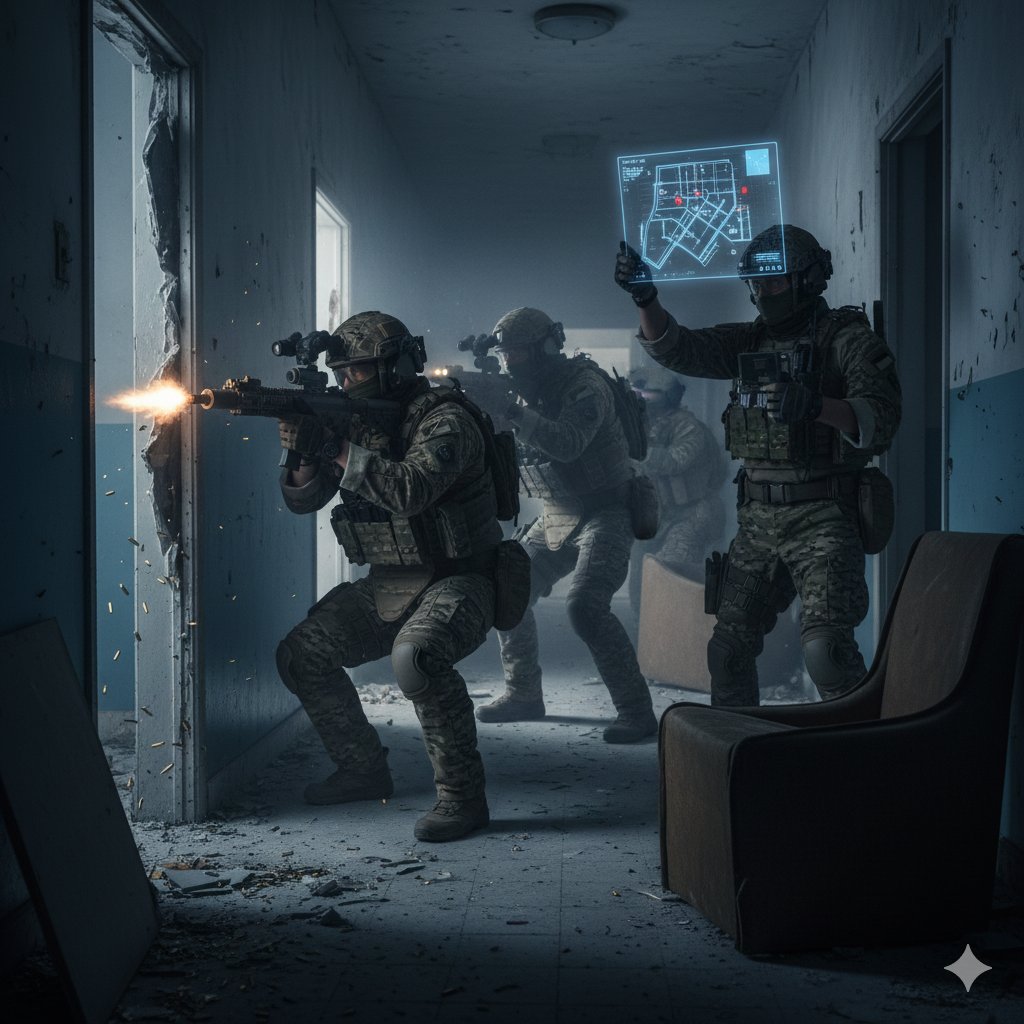
(PRAV) AVA Protocol: Intervention in the Face of Violent Armed Attacks (3–5 days)
-
(AUTP) Self-protection in Risk Zones (100 h)
-
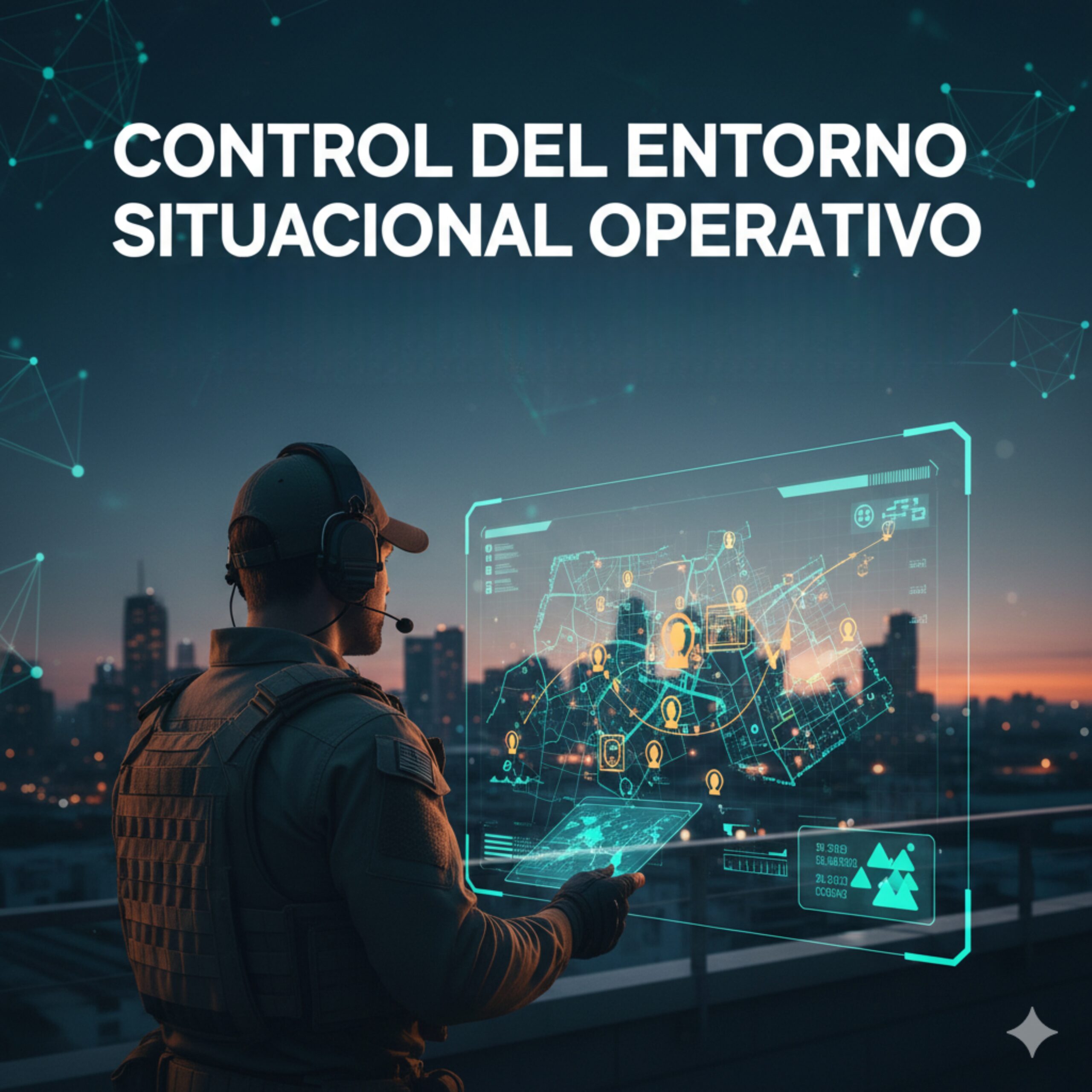
(CESS) Control of the Operational Situational Environment (70 h)
Final integrative project: 100 h
The student will develop an individual work applying the program's approach: scenario assessment, response planning, self-protection, and intervention and assistance protocols.
Methodology
The itinerary combines content theorists with a focus practical and applied, aimed at generating operational capabilities and performance criteria under pressure.
Includes:
-
Educational content in web format with teaching resources (texts, images, guides and supplementary material).
-
Operational protocols and technical documentation applicable to critical scenarios.
-
Practical cases and analysis of real incidents to strengthen situational judgment.
-
Exercises focused on environmental assessment, threat identification, and decision making.
-
Training in self-protection procedures and reaction to violent scenarios.
-
Reading resources and supporting bibliography (articles, guides, specialized videos).
-
Self-assessments and activities per module for consolidation of key concepts.
-
Individualized tutoring for support and continuous improvement.
-
Forums and messaging for interaction with instructors and resolution of doubts.
-
Voluntary videoconferences (recorded for later viewing).
-
Final integrative work as a methodological and operational closure of the program.
Title
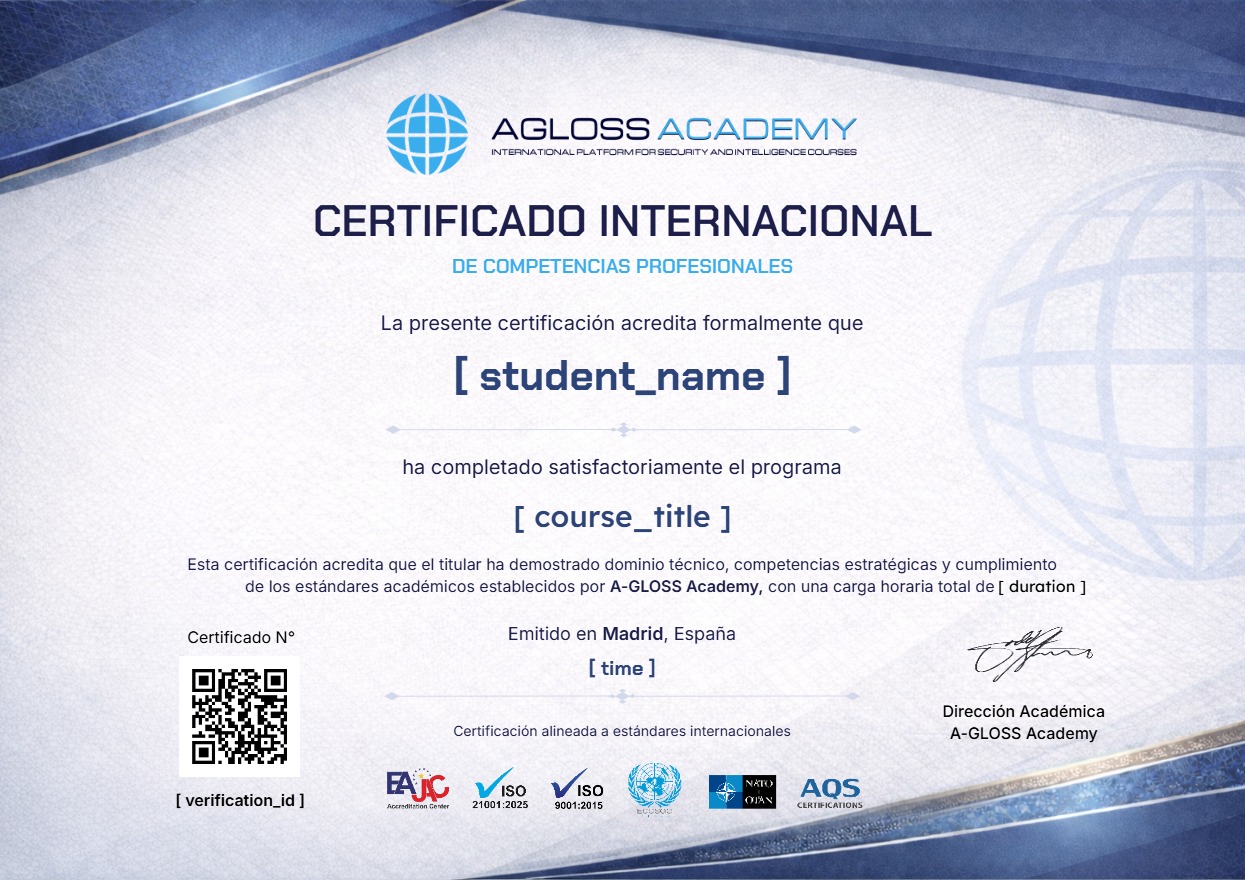
Upon completion, participants will receive a certificate of completion endorsed by A-GLOSS, demonstrating their skills as Expert in Scenario Management in Complex Environments, with applied expertise in: self-protection, environmental control, intervention in violent incidents and tactical first aid in critical scenarios.
What Will You Learn?
Analyze complex and dynamic scenarios to anticipate threats and operational risks.
Apply situational environment control to improve decision making under pressure.
Identify terrain vulnerabilities, critical routes, and risk points in hostile contexts.
Develop self-protection criteria in risk zones and unstable environments.
Implement personal safety measures and operational survival procedures.
Implement response protocols for critical incidents and situations of extreme violence.
Apply the AVA Protocol for intervention in violent armed attacks.
Coordinate immediate response to scenarios with active aggressors and multiple risks.
Manage evacuation, protection, coverage and tactical communication in operational crises.
Apply first aid in tactical environments: hemorrhage control, trauma and immediate assistance.
Prioritize victims and implement care procedures in situations of multiple injuries.
Use rapid patient assessment techniques and emergency decision-making.
Integrate self-protection, intervention, and tactical medical assistance procedures into an operational plan.
Prepare documentation and operational checklists for crisis response.
Develop a final integrative project applying program methodologies to a real case.
Courses in the Bundle (4)
Get your certificate!
Complete the course to obtain the international certificate from A-GLOSS.